History of QuadLevel
From a 1970 idea to a modern digital game
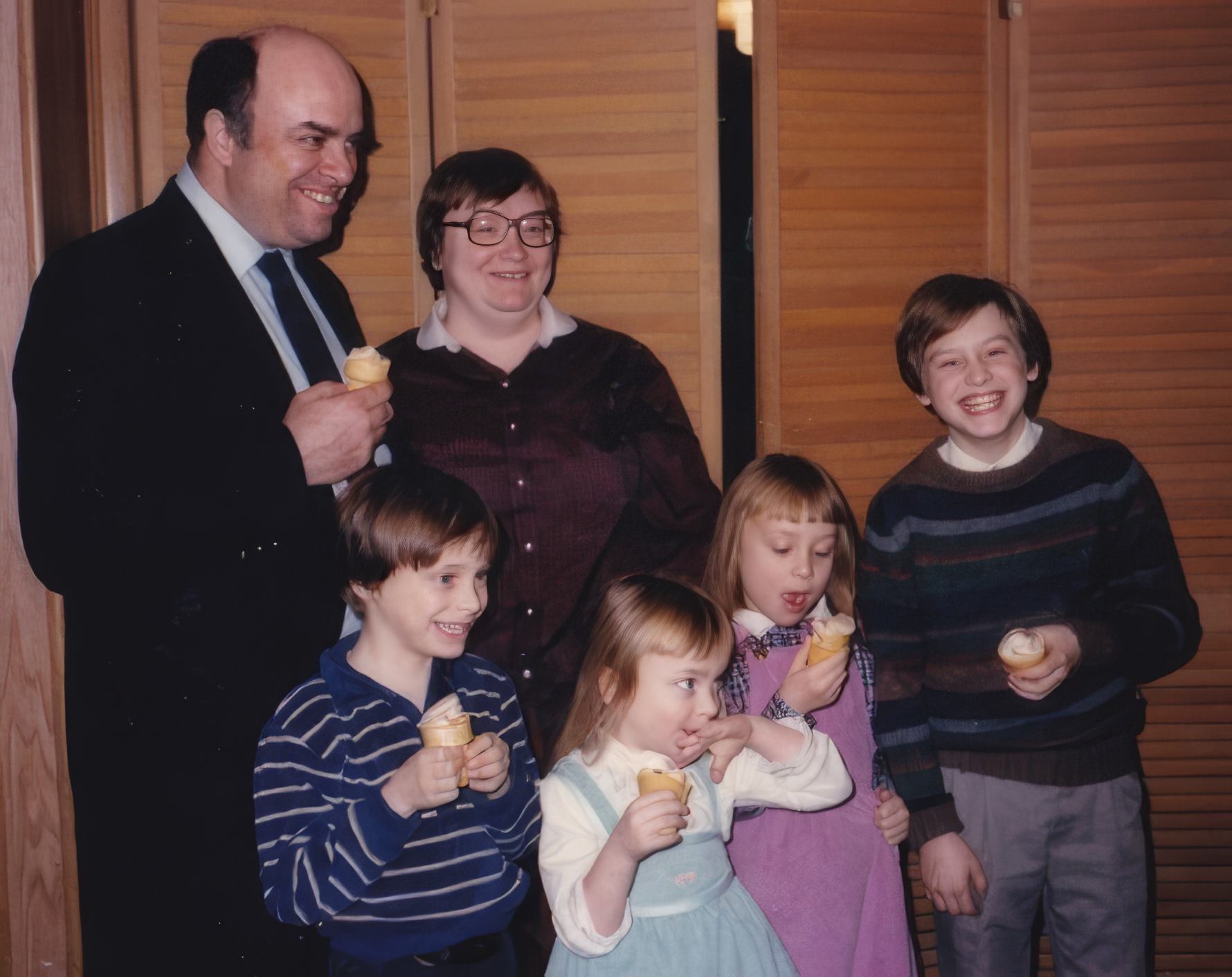
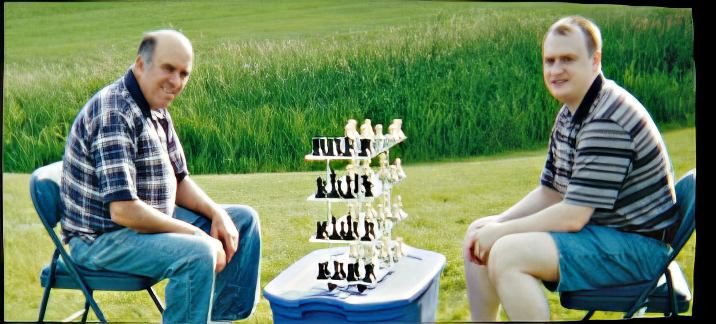
Robert Koernke Sr (1943–2004)
This version of three‑dimensional chess was invented by my father around 1970, inspired by the 3D enthusiasm created by the original Star Trek series. QuadLevel does not resemble the television prop game with seven movable boards; instead it was designed from the start to be genuinely playable, mathematical, and balanced.
Over decades of play we refined the rules, keeping what worked and removing what did not. The concepts remain close to classical chess, so learning QuadLevel can strengthen ordinary 2D play—like practicing with three bats and returning to one.
A booklet written by Robert Koernke Sr, The Complete Rules of Three Dimensional Chess (1970), is still held at the University of Michigan Undergraduate Library. The major change since that edition is the standard win condition: originally both Kings had to be mated, which proved to make games excessively long.
In the 1970s my father and his friend Gerhard “Gary” Fritsche demonstrated the game on the Diag at the University of Michigan, often drawing crowds of fifty students. At the time it was simply called “3D Chess”; later we adopted the name QuadLevel.

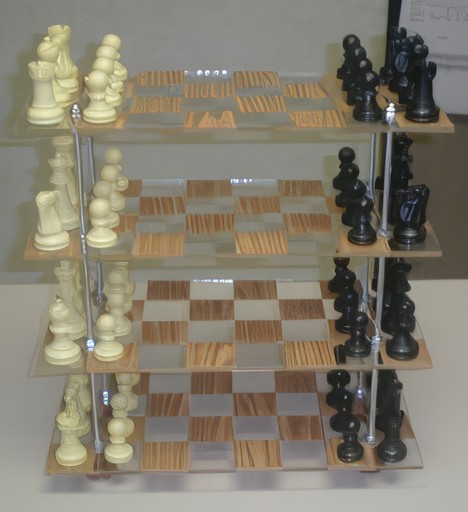
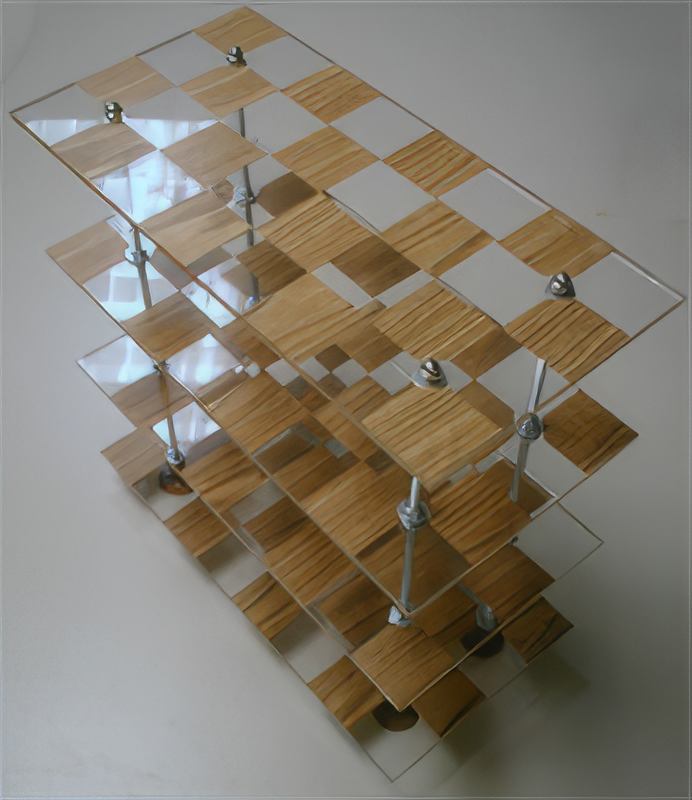
I once built and sold physical boards, but production and shipping became difficult to maintain. Interest still appears from time to time, and I continue to look for partners who could craft sets more efficiently.
Differences from Other 3D Versions
Learning QuadLevel is mainly a matter of realizing how pieces move in the 3rd Dimension. You may at first think the Knight gains new reach and becomes comparable to a Rook, while the Bishop is slightly restricted by the limited board depth, but as you begin playing you will come to realize, this thinking should be abandoned. The game includes castling, uses two complete sets of standard chessmen, and avoids exotic pieces or confusing “tri‑diagonal” rules.
The Change in Distance Rule preserves balance across levels and keeps the game intuitive for players coming from classical chess. Games are similar in length to ordinary chess, and double pawn moves are allowed. Each side begins with full home rows, and the alternating squares between levels maintain the familiar geometry of movement.